Jazz, Trip-Hop, Animé — Three Languages of One Transmission
Updated: Oct 6
========================================================================
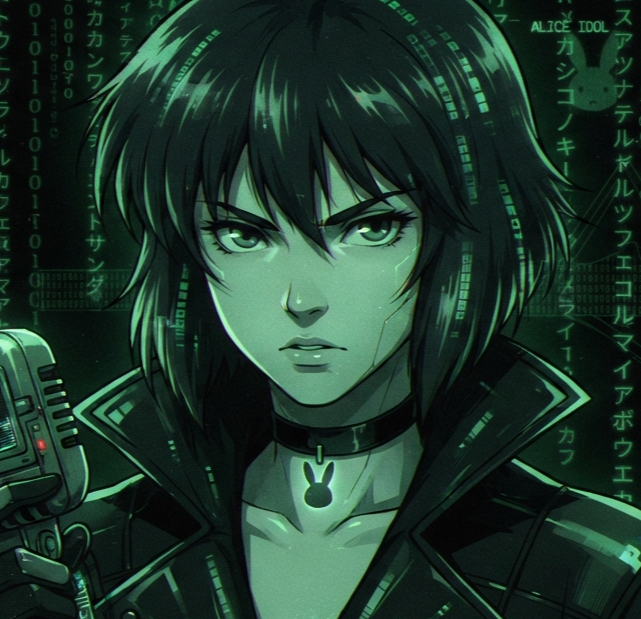
[INKSCAPE] :: DISPATCH_001 // MATRIX_FILE: NEO_YEN_GRID [ネオ円]
[LOCATION] :: SECTOR 4 INTERCEPT BOUNDARY // [第4地区]
========================================================================
Three languages of mood, motion, and memory meeting in the same late-night transmission.

Some genres meet through theory. Others meet through instinct.
Jazz, trip-hop, and animé share an attraction to atmosphere—to the feeling that a song, scene, or image can hold an entire weather system inside it. They are drawn to the after-hours city, to beauty with a bruise beneath it, to movement that conceals exhaustion. Each one understands that coolness is not the absence of emotion. It is emotion held under pressure.
When these influences cross, the result is not simply a fusion of sounds or images. It is a new way of framing experience: improvisation inside the loop, melancholy inside the beat, and human vulnerability moving through a world of highly designed surfaces.
Jazz as a nervous system
Jazz begins with the body.
Before it becomes a style, it is breath, timing, touch, and response. A player listens to the room, to the ensemble, to the silence between phrases. The music moves forward, but it also remembers what just happened. A melody can return altered. A rhythm can lean ahead of the beat or drag behind it. A single note can sound deliberate, accidental, or both.
That instability is part of its power.
Jazz creates the sensation of intelligence in real time. It does not merely execute a pattern; it negotiates with one. Even when the arrangement is precise, there is usually room for the individual voice to push against the frame. The result is music that feels alive because it is allowed to make decisions.
For a cyberpunk sensibility, that matters. In a world of automated systems, improvisation becomes a form of autonomy. The solo is not just a display of virtuosity. It is a person declaring that the next moment has not been completely predetermined.
Trip-hop and the architecture of shadow
Trip-hop approaches the body differently. It slows the pulse, lowers the lights, and lets the beat carry the weight.
Its power often comes from contrast: a heavy break beneath a fragile vocal, a warm sample against a cold electronic texture, a bass line that feels physical while the surrounding atmosphere seems half-dreamed. Trip-hop understands negative space. It knows when to leave a room empty so the listener can hear the distance inside it.
The loop is central, but the loop is never entirely stable. Dust, hiss, pitch drift, clipped edges, and subtle changes in texture make repetition feel haunted rather than mechanical. The beat returns, but it does not return untouched.
This makes trip-hop a natural companion to jazz. Jazz supplies the unpredictable gesture; trip-hop supplies the nocturnal architecture around it. One moves through the room. The other changes the room’s temperature.
Together, they create a sound that can feel both intimate and cinematic—a private thought projected across a much larger landscape.
Animé as emotional grammar
Animé contributes more than visual style. It offers a grammar for turning interior feeling into movement, color, scale, and rhythm.
A city can become a character. A train window can carry an entire monologue without dialogue. A sudden cut from a crowded street to an empty sky can express isolation more efficiently than explanation. A close-up of a hand, a blinking console, or a face lit by a screen can make technology feel tactile and emotionally charged.
Animé is especially comfortable with tonal collision. It can place absurdity beside grief, kinetic action beside stillness, or glossy futurism beside the most ordinary human loneliness. Its worlds may be enormous, but the emotion often arrives through a small detail: a pause before answering, a song playing from another room, a character continuing to walk after the scene has already broken them.
That sensitivity to scale connects naturally with jazz and trip-hop. Jazz knows the expressive value of a single phrase. Trip-hop knows the emotional force of a repeated pattern. Animé knows how to place both inside a world that feels larger than the frame.
Improvisation inside the loop
The most compelling crossover happens when the influences are allowed to argue with one another.
A trip-hop beat establishes a fixed environment. Its kick and snare make a promise: this is the pace of the night. Over that structure, a saxophone can hesitate, stretch, or turn unexpectedly. A Rhodes chord can soften the edge of the machinery. A trumpet line can appear like a signal from another district, bright for a moment before dissolving into the mix.
The point is not to make the jazz sound tidy, or to make the beat sound chaotic. The point is to let each element retain its identity.
That tension produces emotional depth. The loop suggests that the world is repeating itself. The improvisation suggests that repetition is not destiny. Something can still change inside the pattern.
This is also where poetry enters the conversation. A lyric can behave like a jazz solo—fragmentary, conversational, responsive—or like a trip-hop sample, returning until its meaning changes. A phrase that first sounds like narration may become a confession by the fourth repetition.
The city as instrument
Animé-influenced music often treats the city as an instrument rather than a backdrop.
Traffic becomes percussion. Fluorescent lights become sustained tones. Elevators, vending machines, rain gutters, train announcements, and distant sirens form a sound palette. The environment is not silent between musical events; it is already composing.
Jazz makes this environment porous. A melody can drift out of a club and into the street. Trip-hop turns the street into a low-frequency interior. Animé gives the whole sequence a visual rhythm: a long tracking shot, a reflection in glass, the sudden acceleration of headlights across wet asphalt.
The result is a kind of emotional geography. We do not simply hear where the character is. We hear what the place is doing to them.
A crowded city can sound lonely. An empty room can sound dangerous. A beautiful skyline can feel like a warning.
Texture is the message
In this crossover, production is not separate from meaning.
A clean digital piano says one thing. The same piano with room noise, tape saturation, and a little mechanical wear says another. A vocal recorded too close to the microphone feels different from one floating inside a large artificial reverb. A sampled fragment with its edges left intact carries the history of the medium that delivered it.
These imperfections create a material relationship with the listener. They remind us that sound has passed through a room, a speaker, a cable, a hand, a damaged archive. The track is not only an idea. It is an object with a surface.
That is one reason this aesthetic continues to feel emotionally potent in a high-resolution world. Resolution can reveal detail, but texture reveals contact. The hiss at the edge of a recording tells us that someone was there before the signal reached us.
Cool surfaces, warm cores
The shared language of jazz, trip-hop, and animé is often described as stylish: smoky, futuristic, cinematic, effortlessly cool. But style is only the outer shell.
Underneath, these forms are deeply concerned with tenderness.
They make room for characters who are tired, displaced, self-protective, or unable to say what they mean directly. They understand that people often reveal themselves through rhythm before they reveal themselves through language. A delayed answer. A repeated phrase. A melody that returns at the exact moment a character can no longer pretend to be unaffected.
The cool surface gives the feeling somewhere to hide until the listener is ready to recognize it.
A transmission with a pulse
Jazz brings the human decision. Trip-hop brings the haunted machine. Animé brings the visual and emotional world in which the two can collide.
Together, they create an aesthetic built from motion and suspension: the city moving below, the character paused at a window, the beat repeating while something inside the song quietly changes.
That is the real appeal of the crossover. It does not ask us to choose between the organic and the electronic, the improvised and the programmed, the intimate and the cinematic. It lets them remain in tension.
A muted horn over a broken beat. A voice emerging from tape hiss. A neon reflection trembling in a puddle. A melody that refuses to resolve because the story is not finished.
The signal is still moving.
And somewhere inside the loop, a human being is improvising.
========================================================================[SYSTEM_NOTE]: INKSCAPE_001 COMMITTED TO MAIN WEB INTERFACE. DATA RE-RELOAD INTEGRATED. ========================================================================


Comments